Collection: Malachite
Malachite has been prized for its color since long before anyone wrote down why. Ground for pigment in ancient Egypt, carved into pillars and tabletops in imperial Russia, it remains one of the few minerals whose green is unmistakable across a room. We select for strong banding, well-defined eyes and a polish that shows the structure rather than hiding it.
What Malachite Is
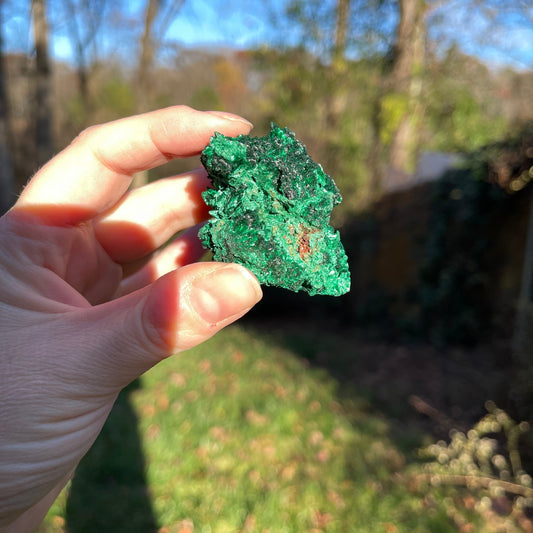
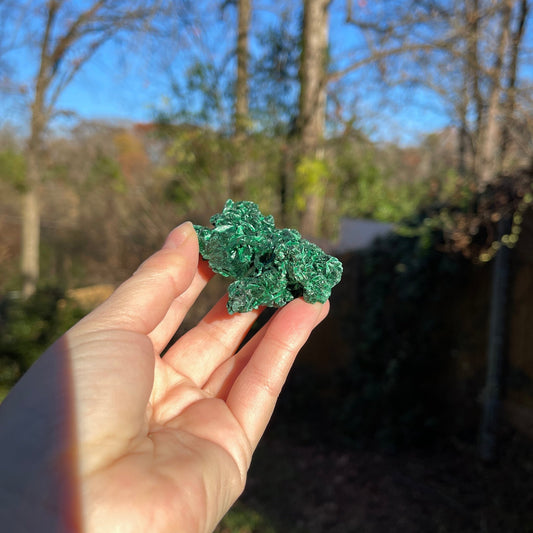
Malachite is a copper carbonate hydroxide, a secondary mineral that forms in the oxidized upper zones of copper deposits where copper-bearing solutions meet carbonate rock. It measures roughly 3.5 to 4 on the Mohs scale, soft enough to scratch with a knife. Its characteristic look comes from botryoidal growth, rounded grape-like masses built up in fine concentric layers, which produce the banded rings and target eyes seen when a piece is cut and polished. Historically the Ural Mountains supplied the finest material; today the Katanga region of the Democratic Republic of the Congo is the dominant source, with notable material from Arizona and elsewhere. Malachite frequently grows alongside azurite, chrysocolla and cuprite. Because it is soft and copper-bearing, keep it dry, avoid acids and salt, do not place it in water, and leave any cutting or sanding to people with proper dust control.
Malachite Meaning and Metaphysical Properties
Malachite is traditionally associated with the heart chakra, and it has a long-standing reputation as a stone of protection and of transformation. It is often described in crystal practice as a bold stone rather than a gentle one.
Many people work with malachite when they want to face something honestly, keeping it close during periods of change or as a talisman for travel, a use that goes back centuries. It is said to bring emotions to the surface rather than smooth them over, so practitioners often pair it with something quieter.
How to Use Malachite
- Keep a polished piece on a desk or altar where its banding is visible and the surface stays dry.
- Hold a palm stone during reflection on a change you are working through.
- Carry a small tumbled piece when traveling, following its old reputation as a traveler's stone.
- Pair it with rose quartz for softness, or with chrysocolla, its frequent companion in the ground.
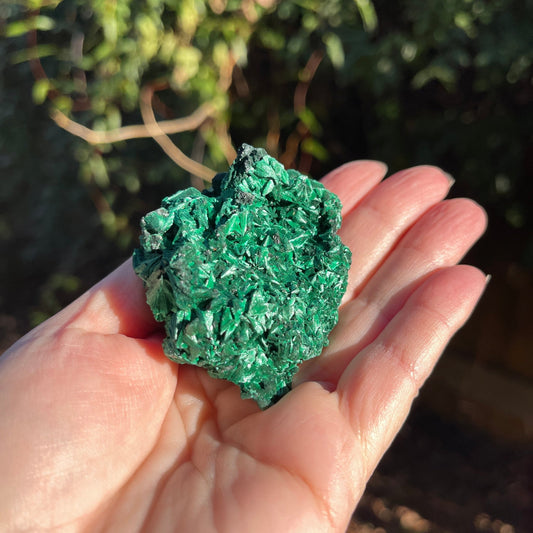
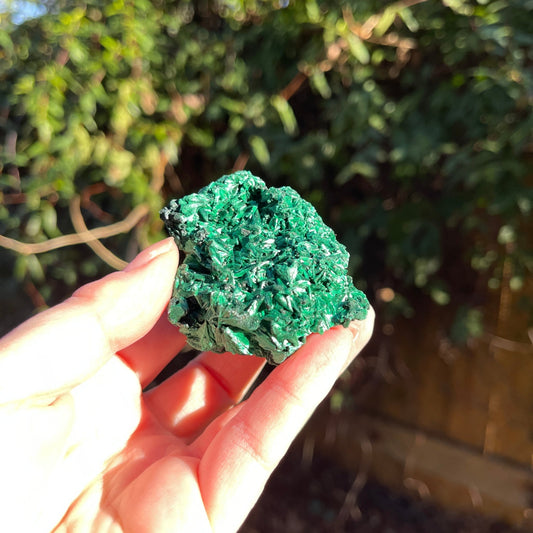
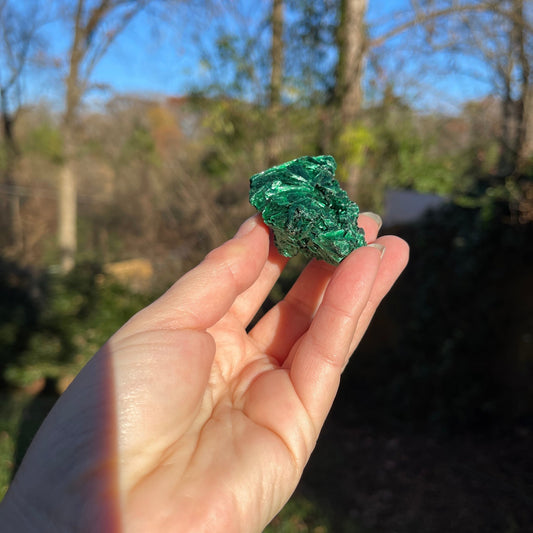
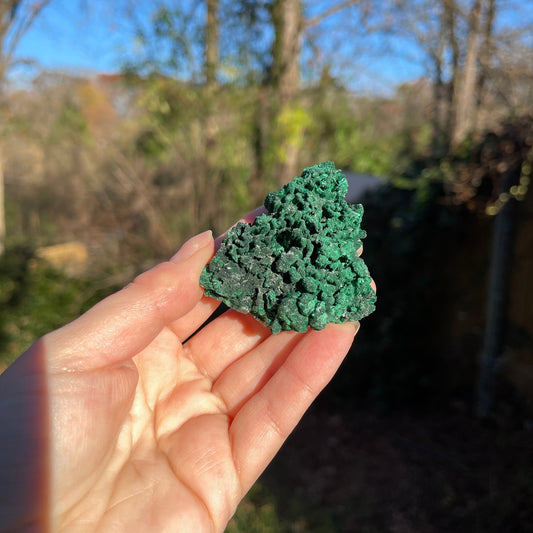
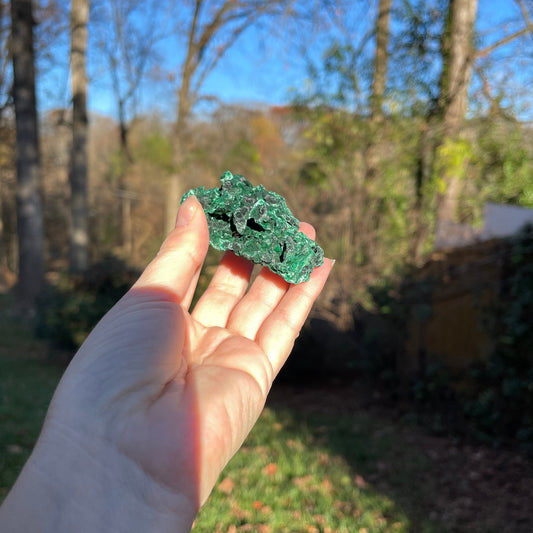
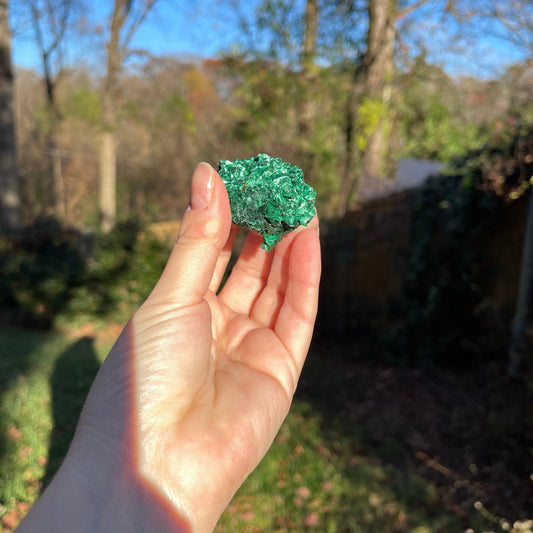
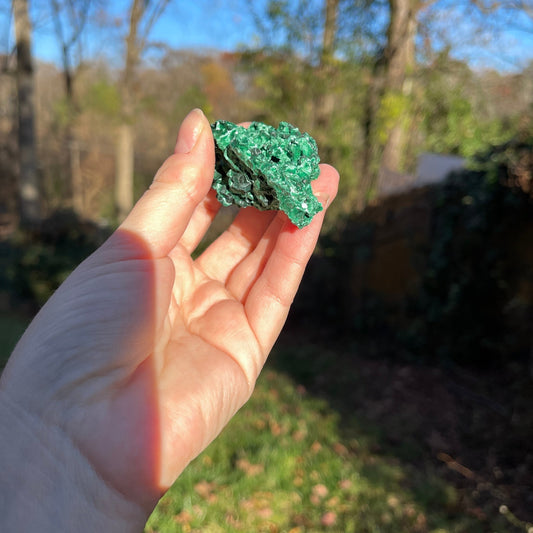
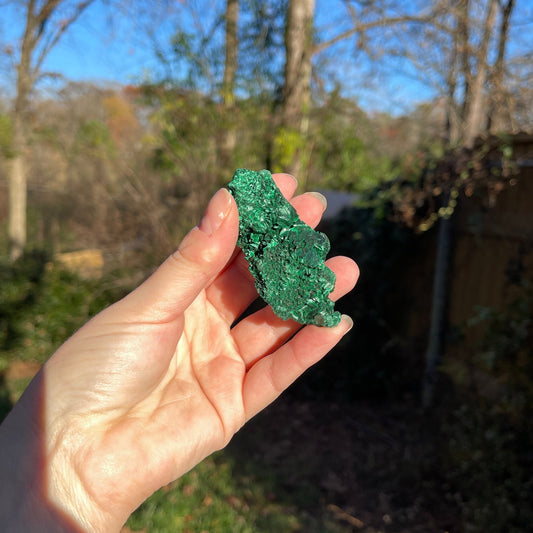
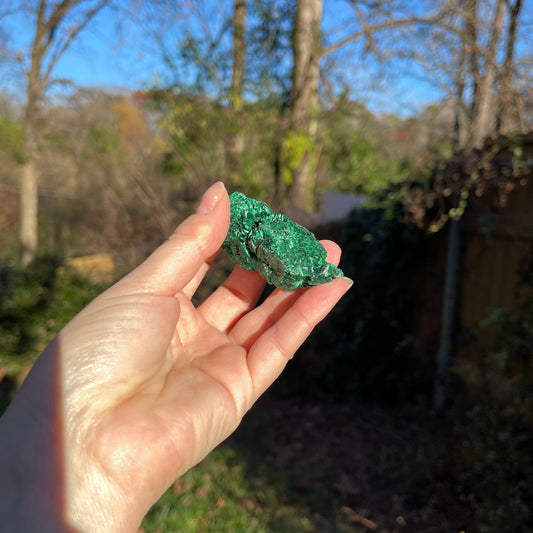
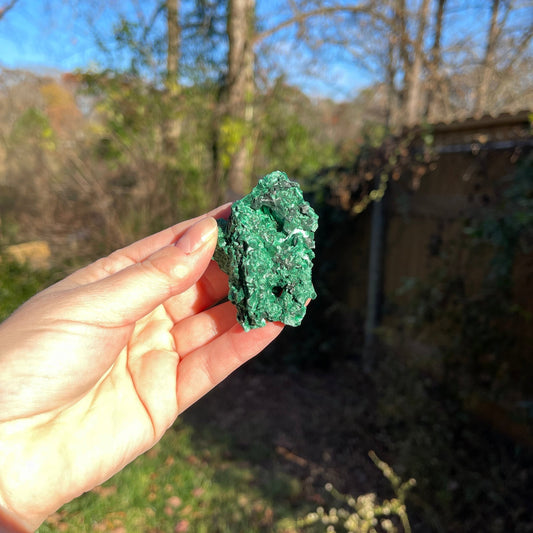
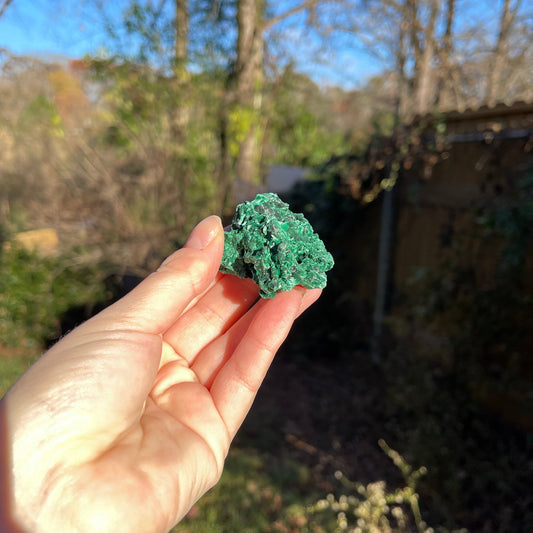
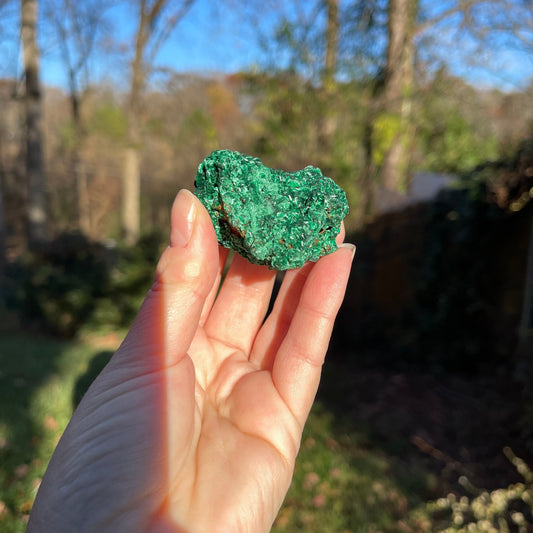
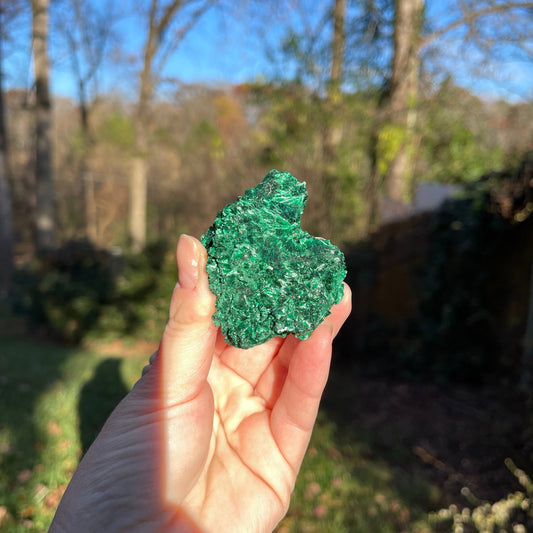
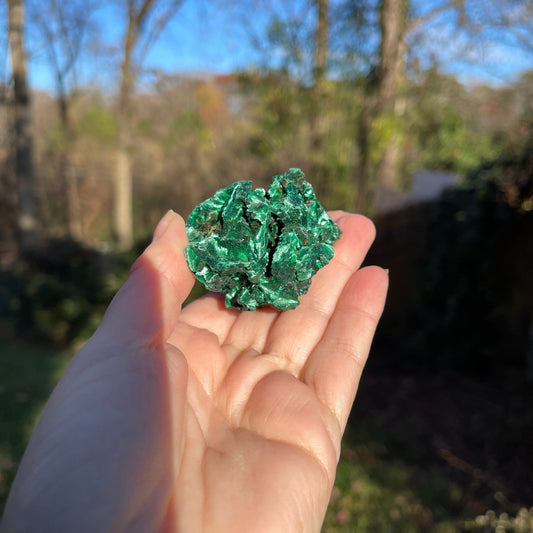
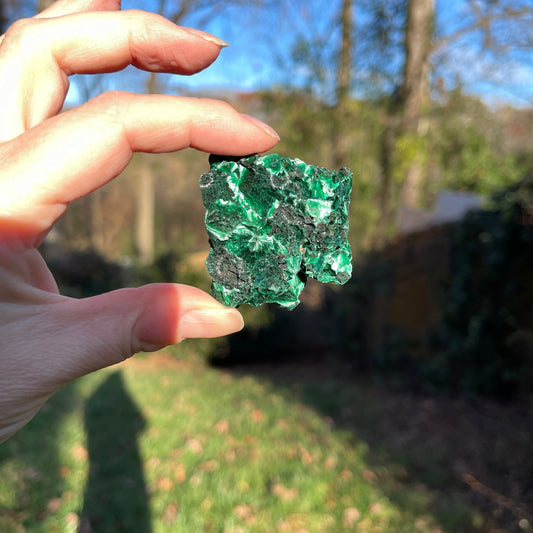
The malachite collection at Healing Stone Beings features banded specimens, freeforms, carvings, spheres and pieces that grew with chrysocolla or azurite, each photographed so you can see the pattern before you choose. Browse the collection and find your green.
 Sold out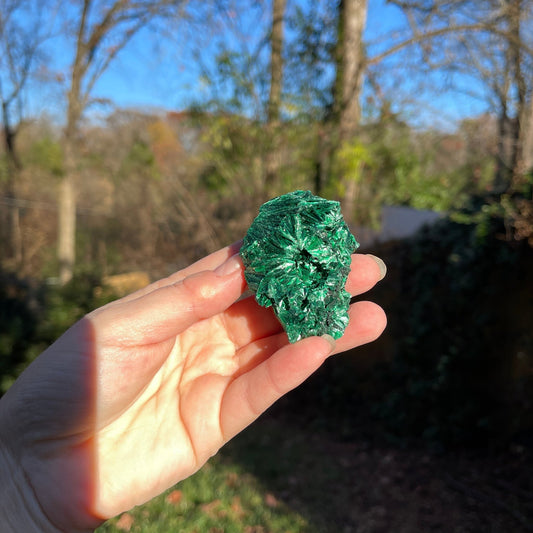
 Sold out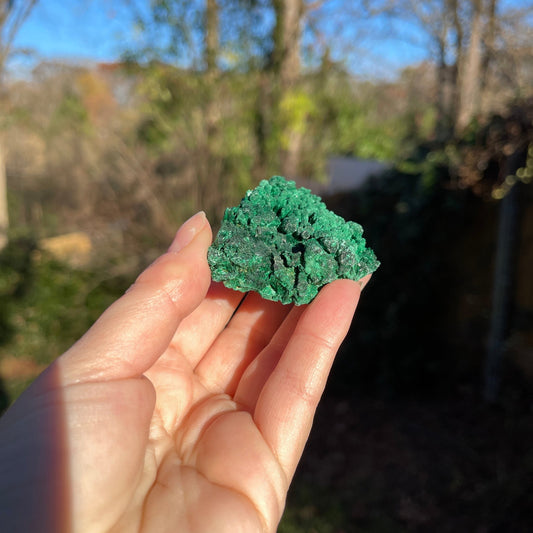
 Sold out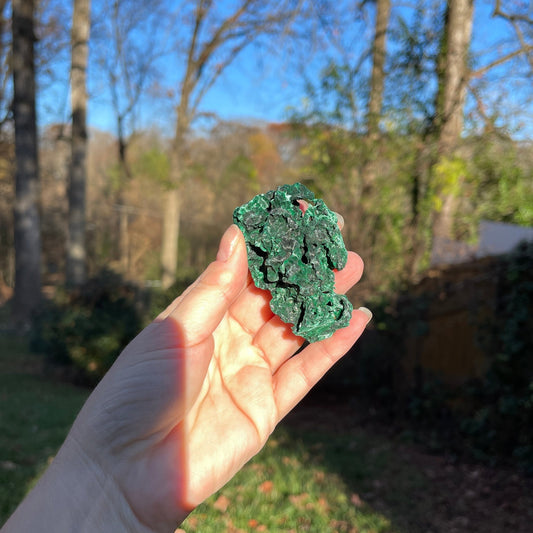
 Sold out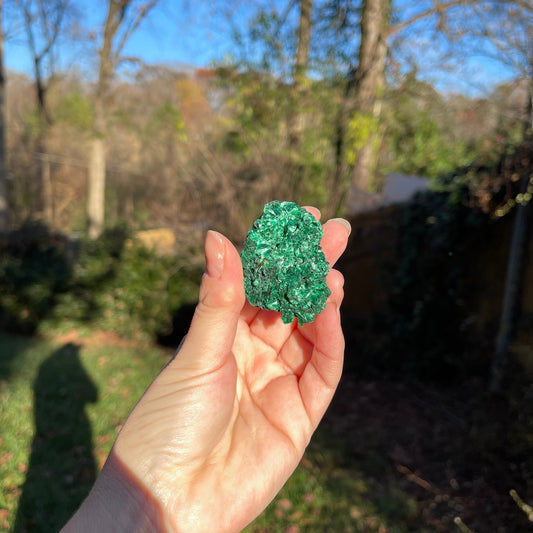
 Sold out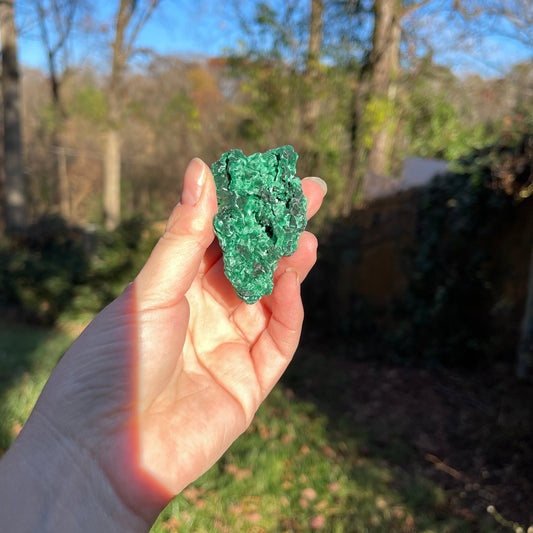
 Sold out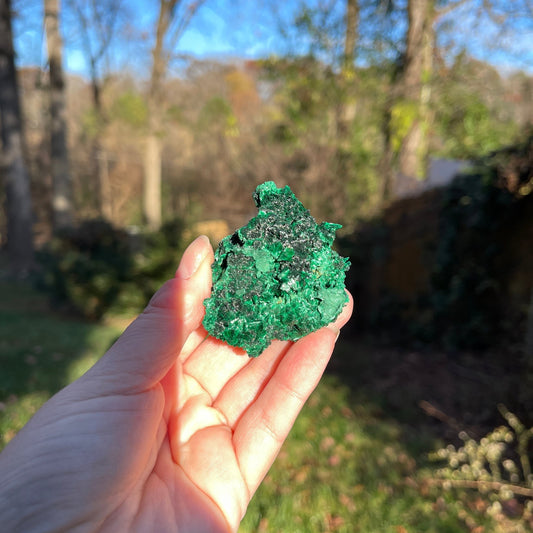
 Sold out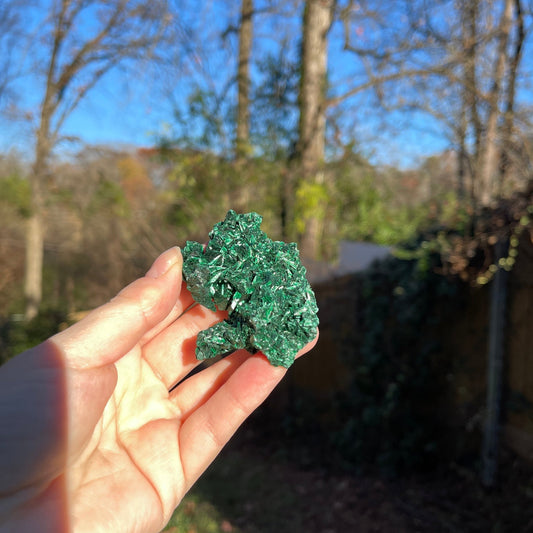
 Sold out