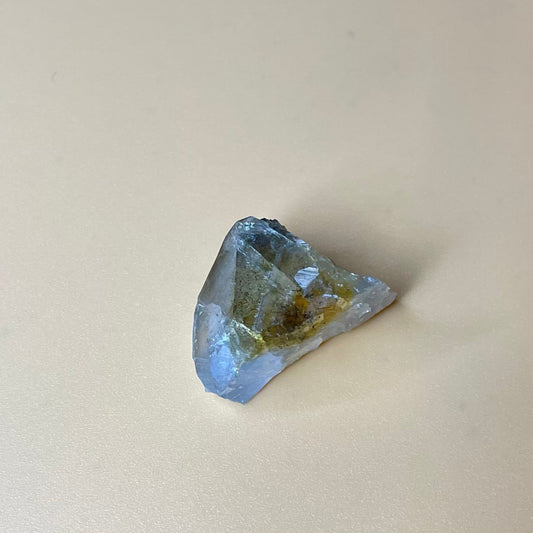
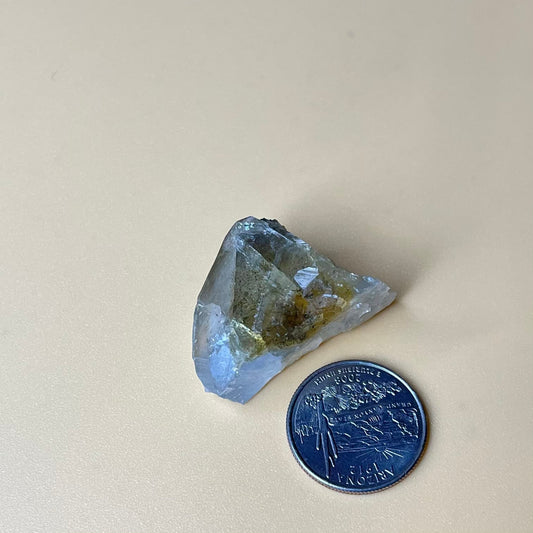
Collection: Celestite
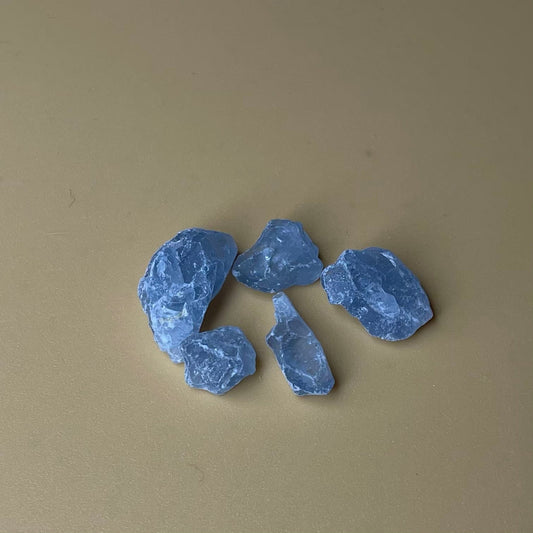
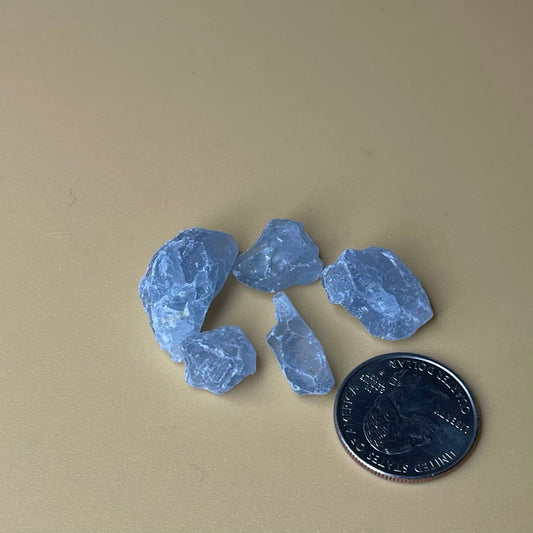
Celestite, known to mineralogists as celestine, is strontium sulfate, and it is the stone most people picture when they think of a pale blue geode. This collection holds geodes, halves, clusters and single crystals, from small pieces that sit in the palm to larger display material.
How it forms and why it looks like that
Celestine grows in cavities in sedimentary rock, particularly limestone and dolostone, where strontium-rich solutions crystallize into open space. The familiar blue is soft and slightly icy, though the mineral also occurs colorless, white and faintly yellow. Because every cavity is a different shape, no two geodes open the same way, and the interior you are looking at belongs to that pocket alone.
Our selection
We buy celestite directly from miners and collectors and choose it in hand, looking at crystal termination, depth of color and how cleanly a geode has been opened. Badly cracked geodes are common in the wider market, and we leave those behind. Nearly every geode and cluster in this collection is one-of-a-kind, since the piece is defined by the cavity it came from.
Living with celestite
Celestine is delicate, roughly 3 to 3.5 on the Mohs scale and with good cleavage, so treat it as a display piece rather than something to handle often.
- Keep it out of prolonged direct sunlight, which can pale the blue.
- Do not soak it or clean it with salt water; dust it with a soft brush instead.
- Set it where it will not be knocked, since crystal tips snap easily.
In crystal tradition celestite is often associated with calm, with dreaming and with quiet spaces, and many people keep a piece in a bedroom or a meditation corner for that reason. Expect natural variation in color depth and crystal size. See what we currently have below.
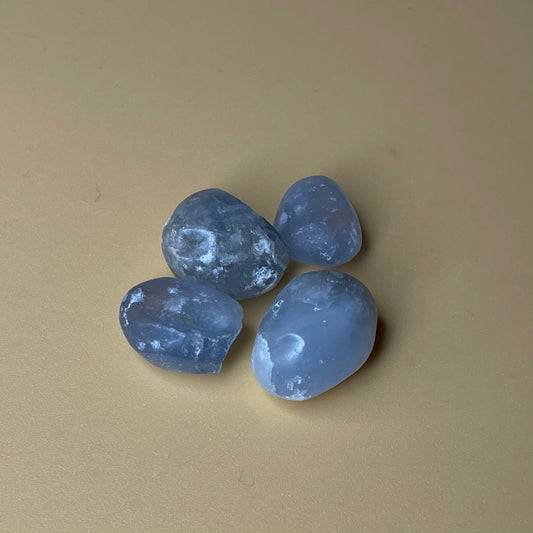
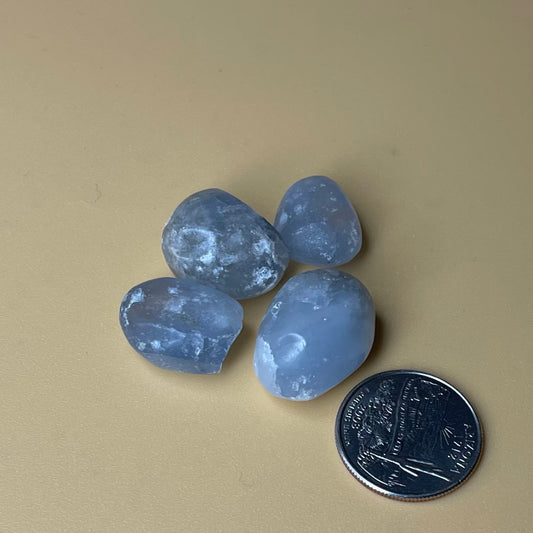
 Sold out