Collection: Labradorite
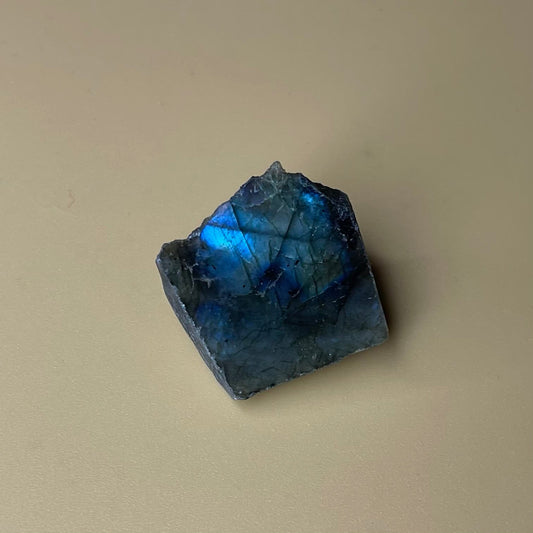
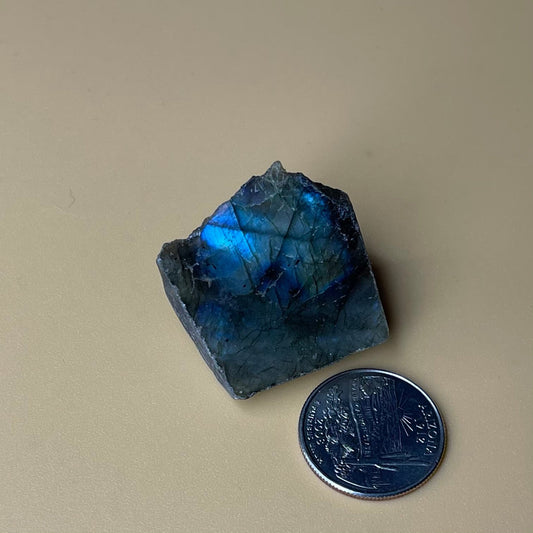
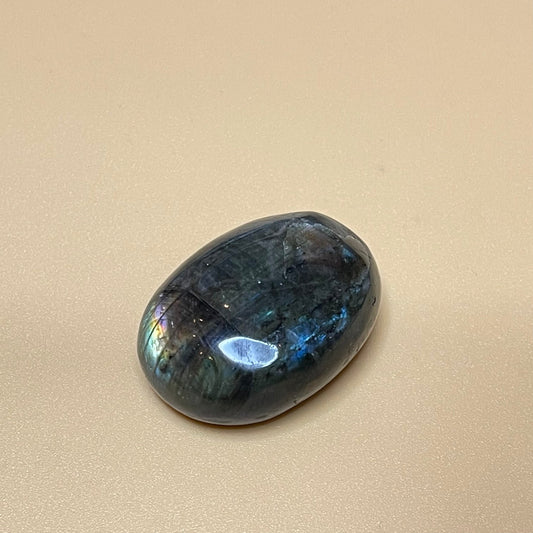
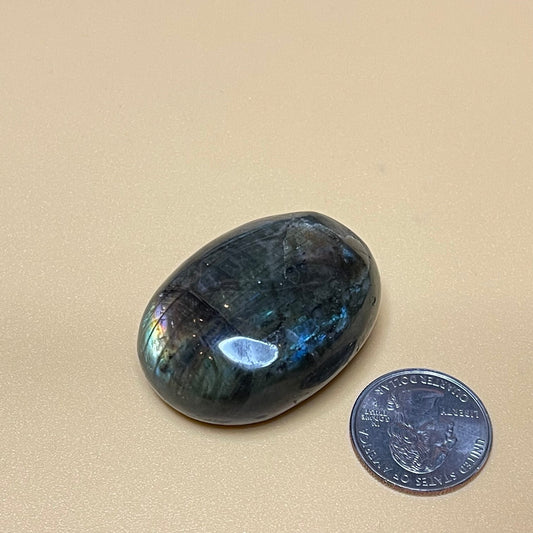
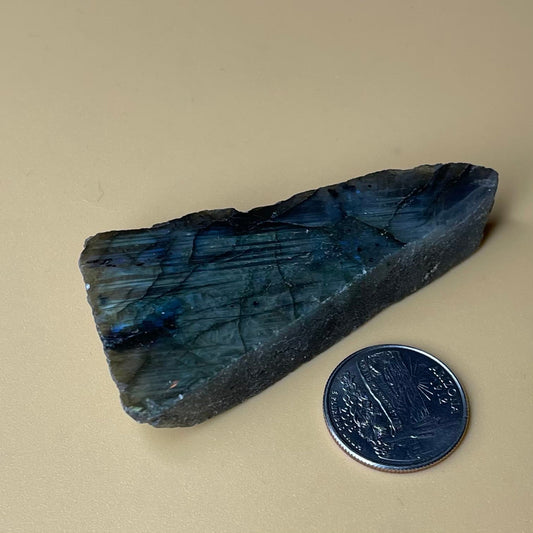
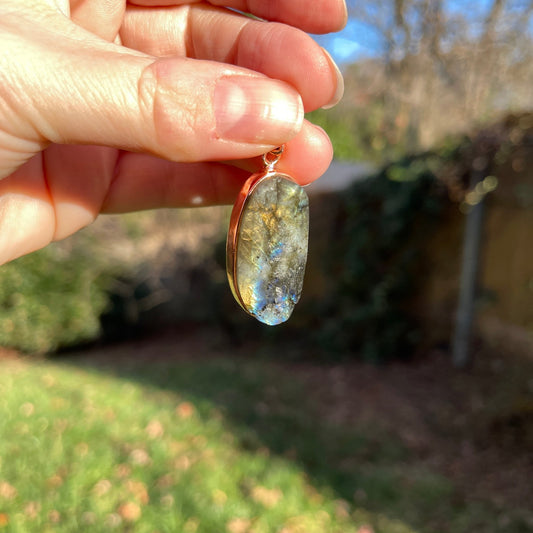
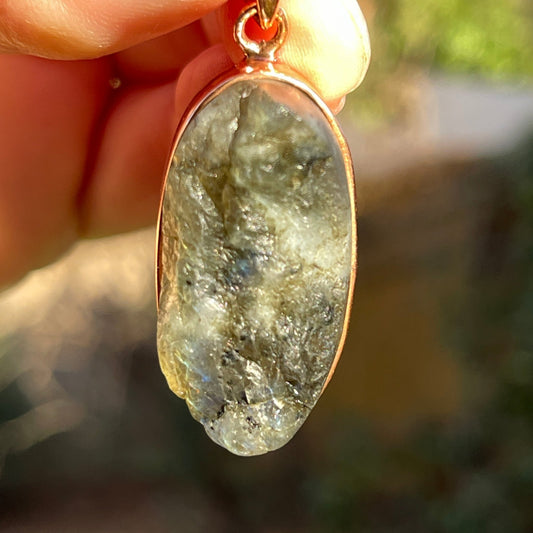
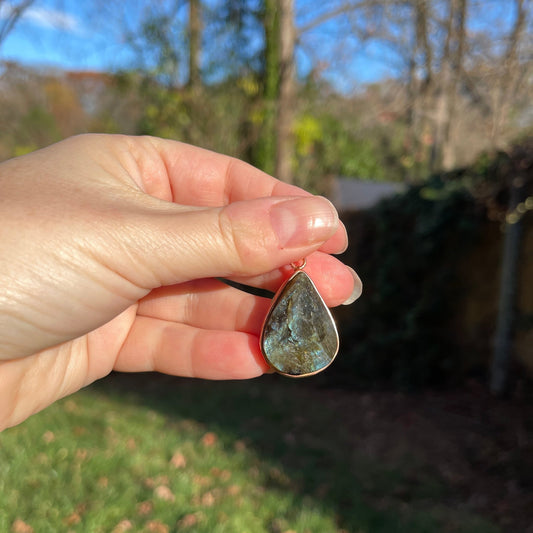
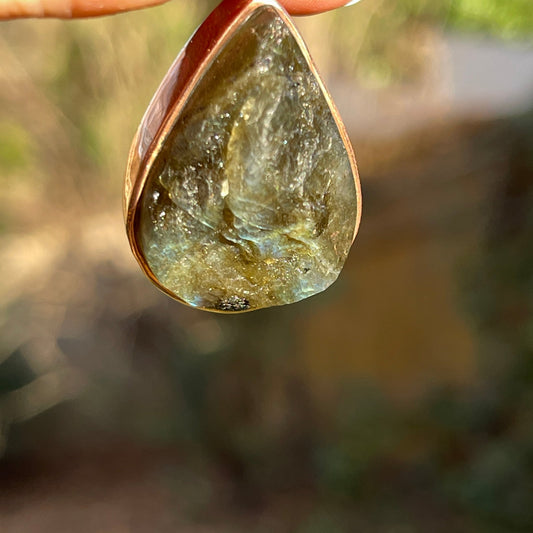
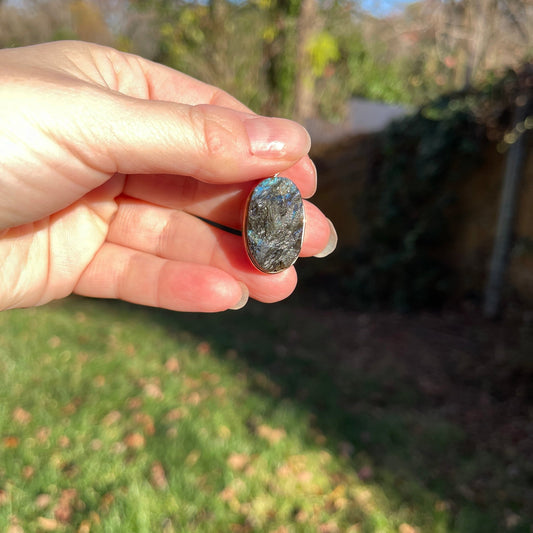
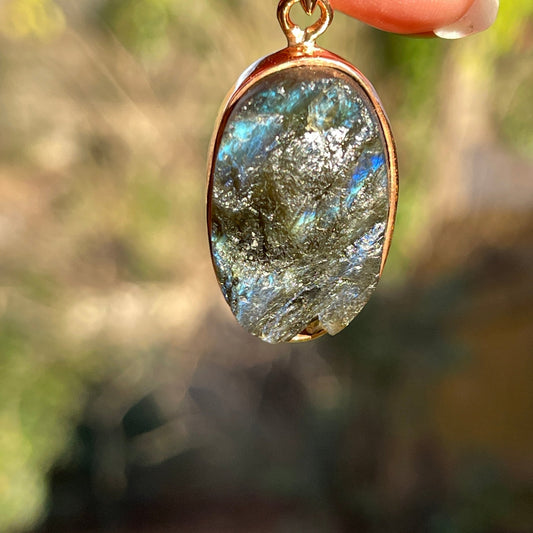
Labradorite is a stone you have to move to understand. Held still it can look like grey rock; tilted a few degrees it opens into blue, gold, and occasionally a rare violet or red. We select every piece flash first, checking the angle and coverage under changing light, because a labradorite that only fires in one narrow band is a very different stone from one that lights up across the whole face.
What Labradorite Is
Labradorite is a plagioclase feldspar, a calcium-sodium aluminosilicate, sitting around 6 to 6.5 on the Mohs scale with two good cleavage directions. Its famous play of color, called labradorescence, is not surface iridescence but an internal effect: as the mineral cooled, it separated into microscopic alternating lamellae, and light reflecting between those layers interferes to produce the color you see. The stone takes its name from Labrador in Canada, where it was described in the eighteenth century. Madagascar is the dominant commercial source today, while Finland produces the intensely multicolored variety known as spectrolite, and material also comes from Russia, Mexico and the United States.
Labradorite Meaning and Metaphysical Properties
Labradorite is traditionally regarded as a stone of transformation and of the threshold, fitting for a mineral that hides its color until you shift your view. It is commonly associated with the third eye and throat chakras, and sometimes with the crown.
Many people work with labradorite during periods of change, or keep it close as a protective companion stone. In practice it is often described as helping someone hold their own edges in busy environments, and it has a long association with intuition, dreaming and creative work that asks you to look at something differently.
How to Use Labradorite
- Carry a palm stone or small freeform in a pocket on days that demand a lot of you socially.
- Set a tower where daylight moves across it, so the flash changes through the day.
- Hold it during meditation focused on a decision, a transition or a question you have been circling.
- Pair it with black tourmaline or smokey quartz for grounding, or with moonstone, its feldspar relative, for dreamwork.
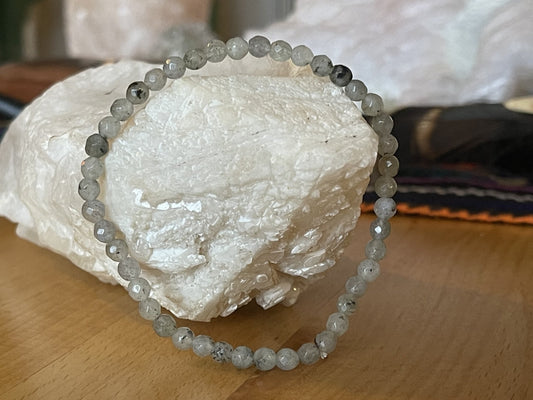
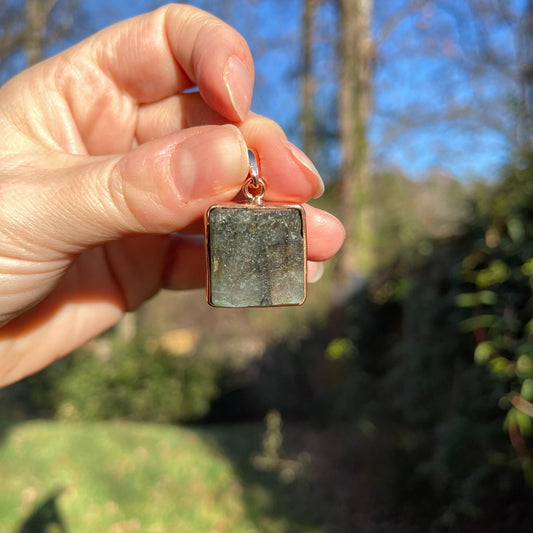
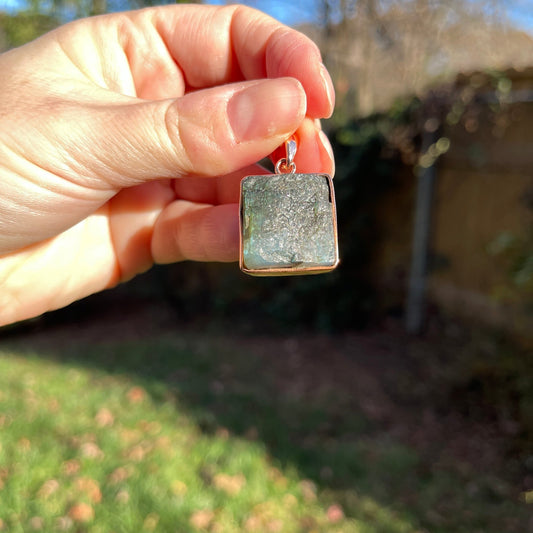
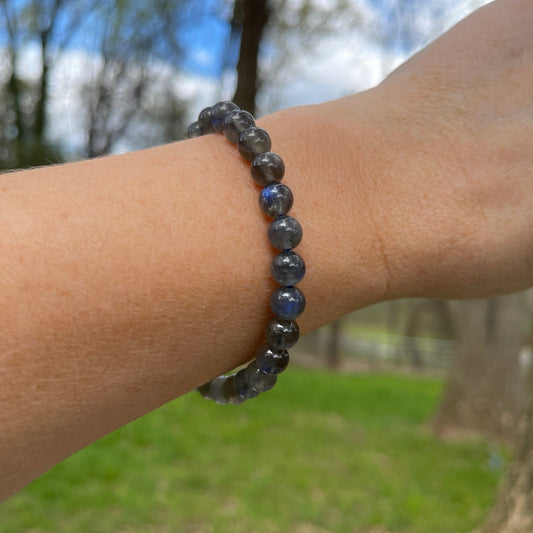
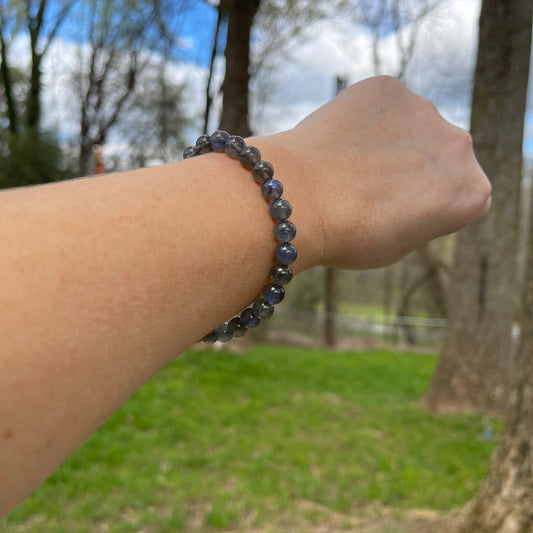
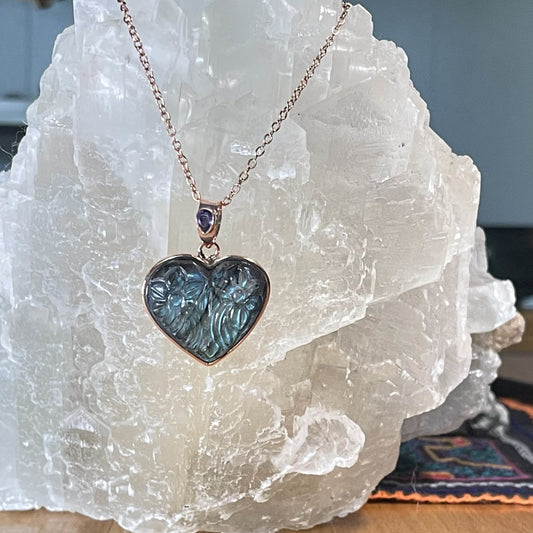
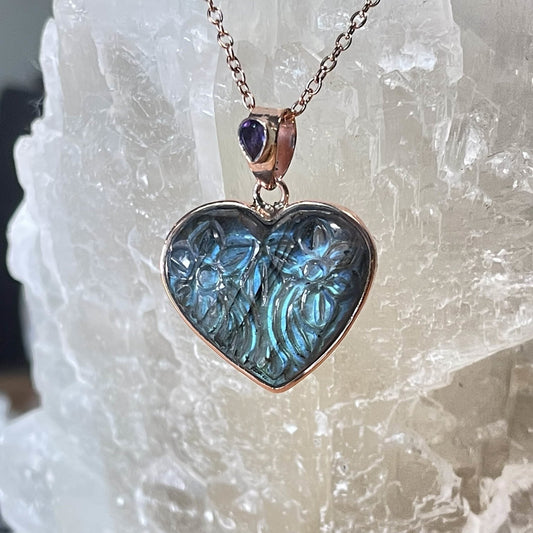
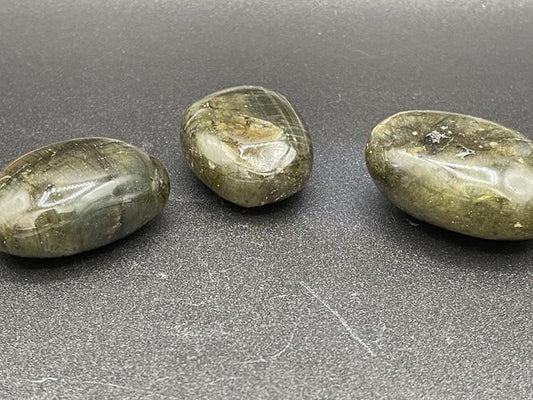
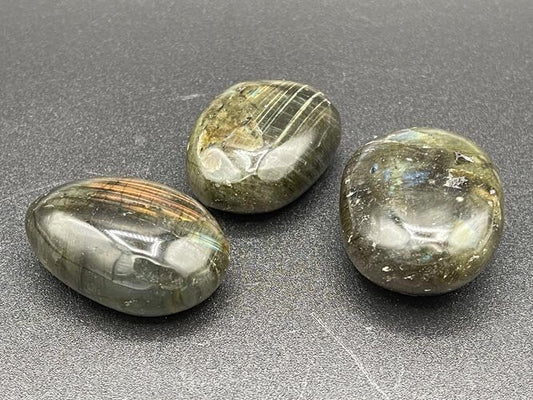
Our labradorite collection at Healing Stone Beings runs from polished freeforms and palm stones to towers, slabs, spheres and carved pieces, each photographed to show the flash as honestly as a still image allows. Browse slowly, and look for the piece whose fire meets you first.
 Sold out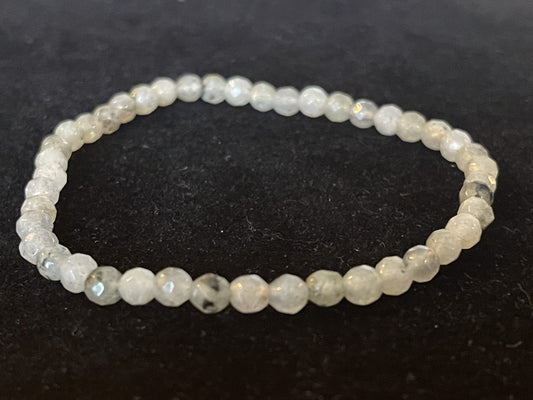
 Sold out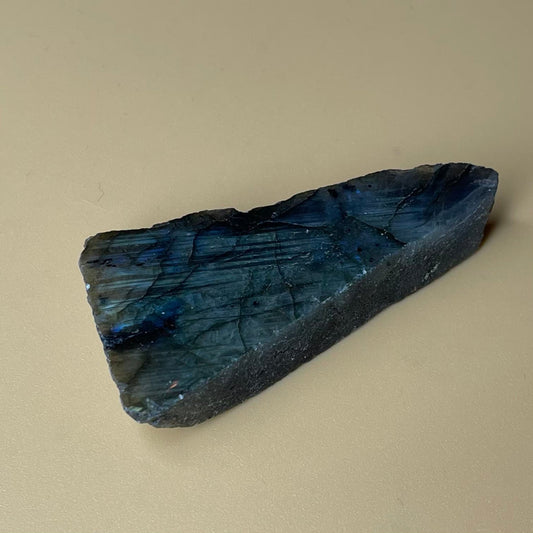
 Sold out
 Sold out