Collection: Apophyllite
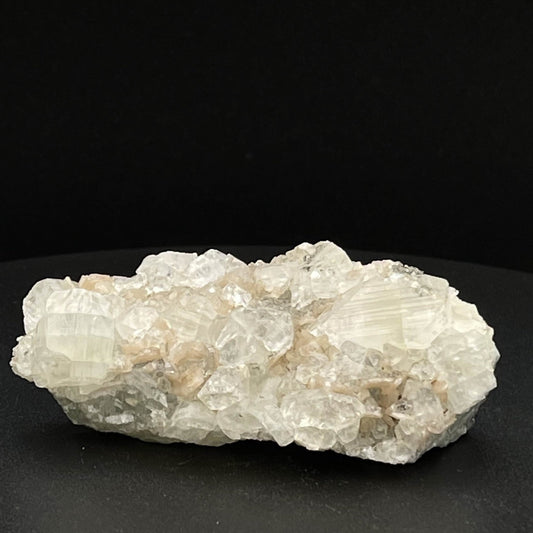
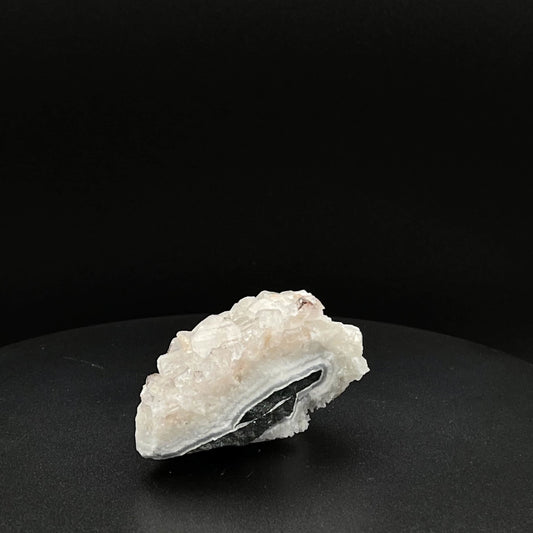
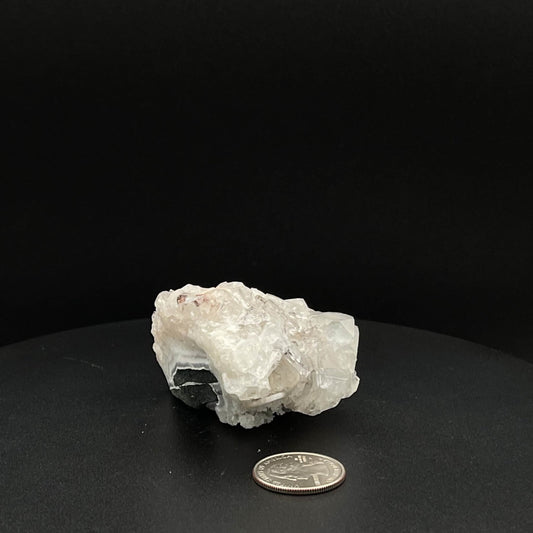
Apophyllite is a phyllosilicate, a sheet silicate, that forms glassy pyramidal and cubic crystals, usually colorless or white and sometimes with a pale green cast. Most of the material collectors know comes from the basalt quarries of Maharashtra in India, where it grows in gas cavities alongside the zeolites.
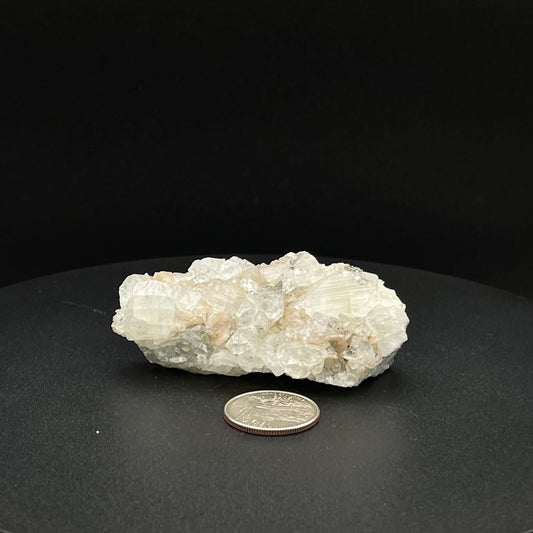
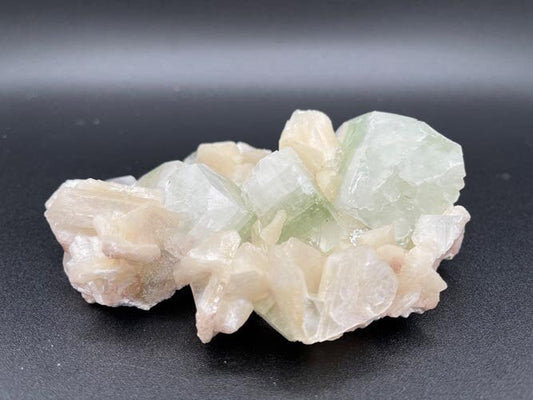
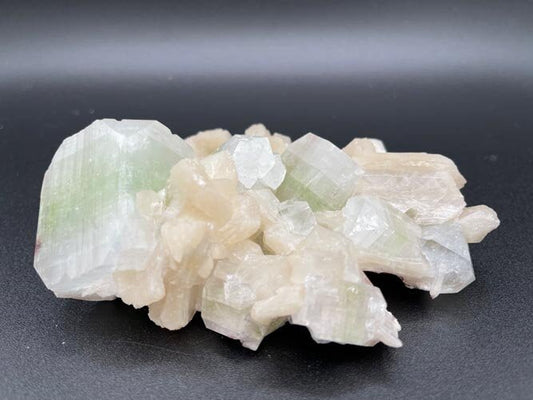
Apophyllite and stilbite
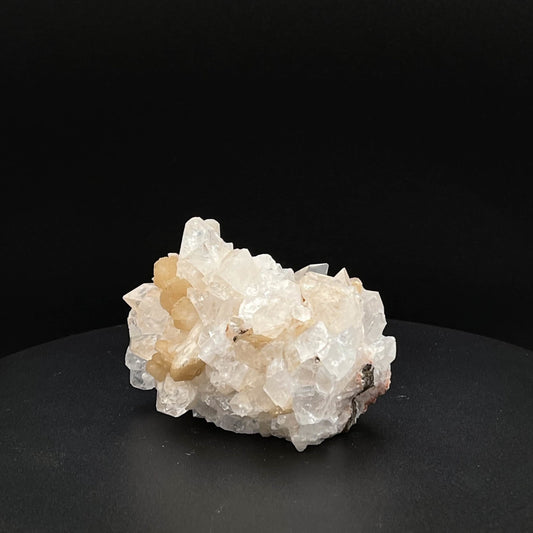
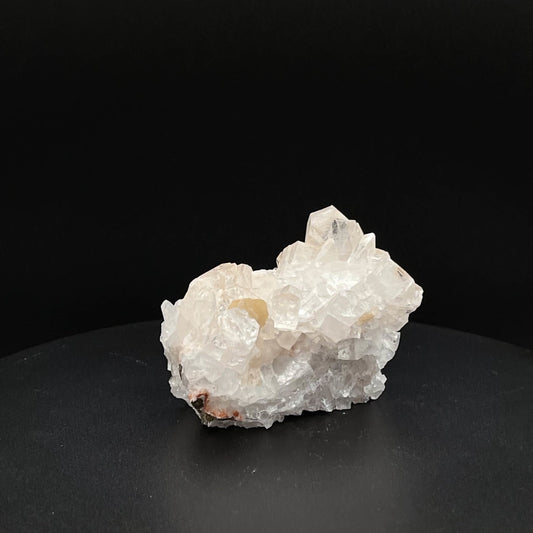
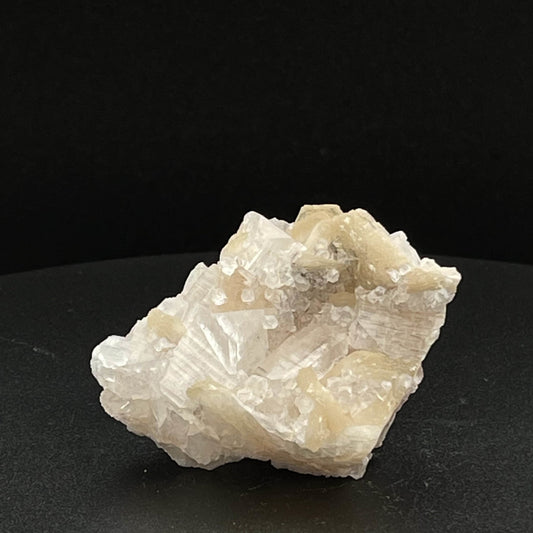
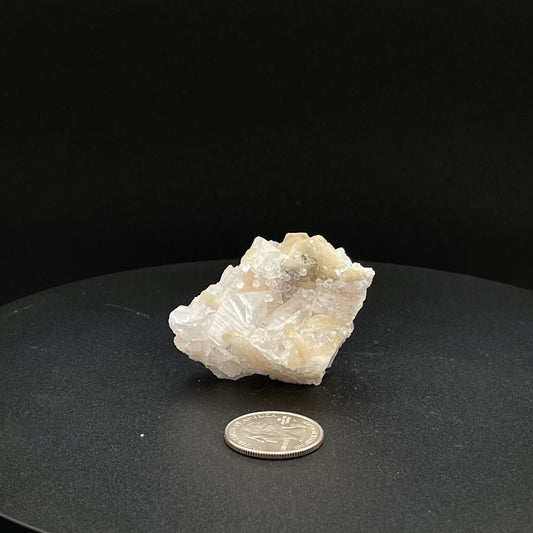
The classic pairing is apophyllite with peach or cream stilbite, the two crystallizing in the same cavity: bright transparent points sitting on a bed of bladed, rosette-forming stilbite. Clusters of that kind are among the most recognizable specimens in mineralogy, and the contrast between glassy pyramids and softer stilbite is exactly why. You will also find apophyllite here on its own, in single pyramids, in green material, and in plates where dozens of small points cover a slab of basalt.
What we select for
Condition is everything with apophyllite. The crystals have perfect basal cleavage and sit around 4.5 to 5 on the Mohs scale, so points break, cleave and cloud easily during extraction and transport. We buy directly from miners and from collectors who pack properly, and Katie Sutton checks each cluster in hand for undamaged terminations, clarity and how well the piece stands on its own. Most clusters here are one-of-a-kind.
Keeping a cluster in good condition
Apophyllite holds water in its structure and does not care for heat or very dry air, and prolonged exposure can dull the surfaces over time.
- Keep it away from radiators, direct sun and hot windowsills.
- Dust it with a soft brush, and do not soak or scrub the crystal faces.
- Lift the specimen by its matrix, never by a crystal point.
In crystal tradition apophyllite is often associated with clarity, reflection and meditative practice, and many people keep a cluster where daylight can catch it during the day. Expect natural contact points and small imperfections, since a flawless cluster is rare by nature. Look through what we have below.